When HVAC systems malfunction, maintenance requires shutdowns, or construction projects request climate control prior to the activation of permanent systems, temporary cooling solutions become essential. The equipment you choose can mean the difference between comfortable surroundings and wasted rental money. Facilities can operate efficiently without going over budget by knowing whether to use a chiller rental versus a portable air conditioner rental.
What Are Portable AC Units?
Rentable portable air conditioners are self-contained units that employ a flexible duct to pull in warm air, chill it, and then release heat. These systems come in a wide range of sizes, from small units that cool individual offices to larger devices that control equipment closets or conference rooms. Most do not require special power installations because they operate on standard electrical circuits.
Instead of taking hours, setup only takes minutes. Adjust the thermostat, plug it in, roll the unit into place, and attach the exhaust duct to a window or drop ceiling. Because of their simplicity, portable units are perfect for last-minute cooling requirements, such as temporary office space conditioning or server room backup during repairs. This category includes spot cooler rental equipment, which is made especially to distribute cold air precisely where heat concentrates.
These devices are commonly utilized in offices during HVAC maintenance windows. They are used seasonally in small commercial buildings without permanent cooling systems. When primary systems fail, server rooms use them as emergency backup. The majority of portable units have a maximum cooling capacity of five tons, which is insufficient for larger rooms or heavy industrial loads.
What Are Temporary Chillers?
Systems for renting temporary chillers operate differently. Chillers distribute chilled water through temporary distribution systems or existing building infrastructure instead of directly cooling air. The chiller itself is located outside the structure and is connected to air handlers, fan coils, or other process equipment that needs temperature control via insulated pipes.
The capacity of these devices ranges from 20 tons to several hundred tons. For manufacturing operations, cleanrooms, or data centers with high equipment loads, industrial cooling systems frequently need this range. During equipment improvements, hospitals maintain operating room temperatures with temporary chillers. When permanent chillers need to be replaced or undergo significant maintenance, large office buildings use them.
With capacity, installation complexity rises. Chillers require the proper electrical service, which is typically 480-volt three-phase power. Water connections need to be integrated with temporary piping networks or construction systems. Noise levels, ventilation, and maintenance accessibility must all be taken into account when positioning.
Key Differences Between Chillers and Portable AC Units
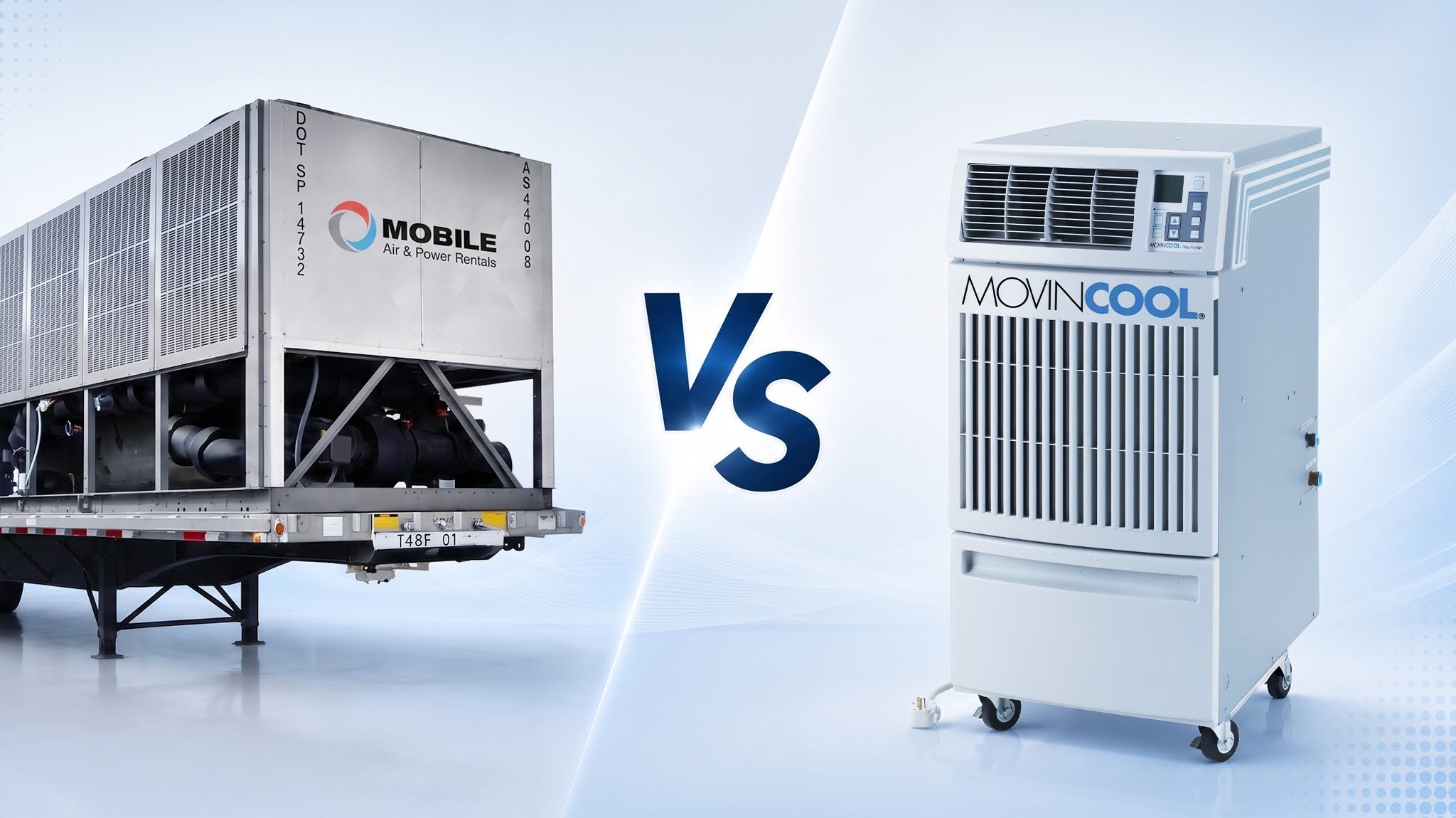
Cooling capacity is the most obvious distinction between the two approaches. A portable unit could effectively chill 1,500 square feet. A 100-ton chiller may handle up to 120,000 square feet, depending on insulation and heat load. A modest chiller installation or many portable units are the only options available to facility managers because of the difference between five and twenty tons.
Setup needs and physical dimensions vary significantly. Portable devices run from regular outlets and fit through regular entrances. Chillers come on trailers, need high-voltage electrical hookups, and need rigging equipment for placement. In an emergency, a rented portable air conditioner is deployed the same day. It usually takes a few days to properly install and commission temporary HVAC rental chillers.
Another difference can be seen in application environments. Without the need for pre-existing infrastructure, portable devices directly introduce conditioned air into rooms. Air handlers, chilled water loops, and process cooling networks are among the building systems that chillers interface with. Temporary chillers are easily adapted to facilities with hydronic heating and cooling equipment.
How to Choose the Right Temporary Cooling Solution
When choosing equipment, start by considering the size of the structure. Portable units typically function well in spaces smaller than 3,000 square feet. Chiller capacity is typically required for facilities larger than 10,000 square feet. In order to find a medium ground, actual cooling loads must be calculated rather than just square footage.
The economic calculation is impacted by the length of the rental. Despite their reduced efficiency, portable units are frequently used for short-term needs lasting less than two weeks due to their low installation costs. Chiller installations that run more profitably over longer periods of time are justified by projects that take months to complete. Energy consumption and leasing charges should be taken into consideration when choosing commercial cooling equipment for the anticipated period.
Next, the heat source’s location is crucial. Nearby spot cooler rental units respond favorably to concentrated heat loads from industrial machines, manufacturing equipment, or server racks. Chillers effectively manage whole-building techniques required by large floor plates with dispersed heat from people, lighting, and solar gain.
Infrastructure accessibility can make the decision easier. While equipment is being changed, buildings with existing chilled water systems can easily install temporary chillers. Because of the expensive temporary piping installations, portable units are sometimes more viable in sites lacking the proper infrastructure, regardless of cooling load.
When Should You Use a Chiller vs. a Portable AC Unit?
Your unique cooling problem will determine which equipment is best for you. You may prevent undercooling and wasteful spending by knowing which scenarios work best for each technology.
To conclude, the ideal times to use portable air conditioners are the following:
- Cooling a small space or a single room
- Controlling localized heat loads
- Temporary cooling while HVAC repairs are being made in the office
The ideal times to use chillers are:
- Cooling big structures or manufacturing facilities
- Maintaining the current HVAC system
- Handling high heat loads in industrial or medical settings
Both short-term cooling options are useful. Before committing to either strategy, match equipment capacity to actual requirements, weigh installation complexity against rental term, and assess current building systems.
Have questions or ready to implement a temporary cooling solution? Contact Mobile Air today to speak with a specialist.