Have you ever experienced a power outage during an event or at your facility? If so, you are well aware that they often happen at the worst time. A sudden outage during a vital manufacturing run can cause operations to halt for several hours. An outdoor event without appropriate backup power risks disappointing the attendees.
Fortunately, some proactive planning can eliminate these risks by choosing the correct generator rental.
Understanding Load and Power Requirements
The first step in creating a generator rental guide is to determine your exact power requirements. List all of the electrically powered equipment, such as lighting, HVAC systems, computers, and event catering equipment.
Every device has a running and starting wattage. When motors and compressors initially switch on, they demand surge power, which can be up to three times their regular working loads. A 5-horsepower air compressor may run on 4,000 watts yet require 12,000 watts to start. Add up all operating watts, then consider your equipment’s highest starting wattage.
Experienced power solution providers conduct thorough load assessments when needed. They account for power factor, voltage dips, and future expansion requirements, preventing undersized equipment from failing under actual operating conditions.
Fuel Types: Diesel vs. Natural Gas vs. Propane
Diesel generator rental is the most common option for extended duration circumstances. Diesel engines provide excellent torque and fuel economy while storing safely for extended periods, making them suitable for emergency backup power.
Natural gas generators link directly to existing gas lines, avoiding the need for recharging over the course of several days. They produce fewer emissions than diesel, making them ideal for indoor applications. However, natural gas units rely on continuous gas service, which can fail during the same events that cause power outages.
Propane offers a middle ground. The fuel can be kept indefinitely without degradation, the tanks are portable for usage in remote locations, and the emissions are comparable to diesel and natural gas.
The key disadvantage is that it has a lower energy density than diesel, which means that long-term usage will require more frequent refilling.
Portable vs. Trailer-Mounted Units
Portable generator rental equipment includes small units that can be lifted by hand as well as wheeled types that require vehicle transfer. Portable generators suit small events, food trucks, and powering select circuits. Their compact size enables precise positioning without extensive cabling.
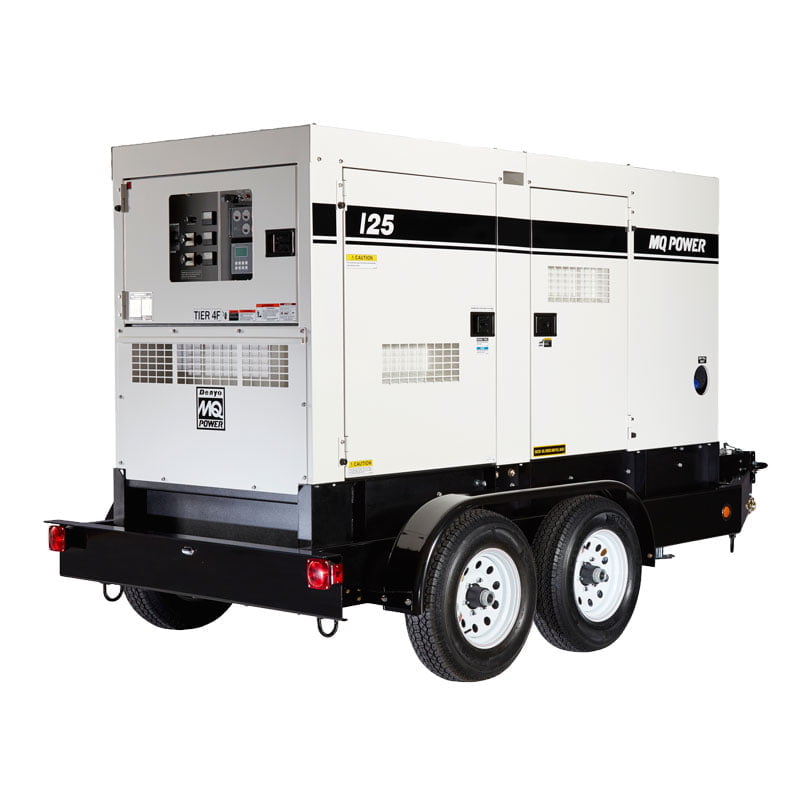
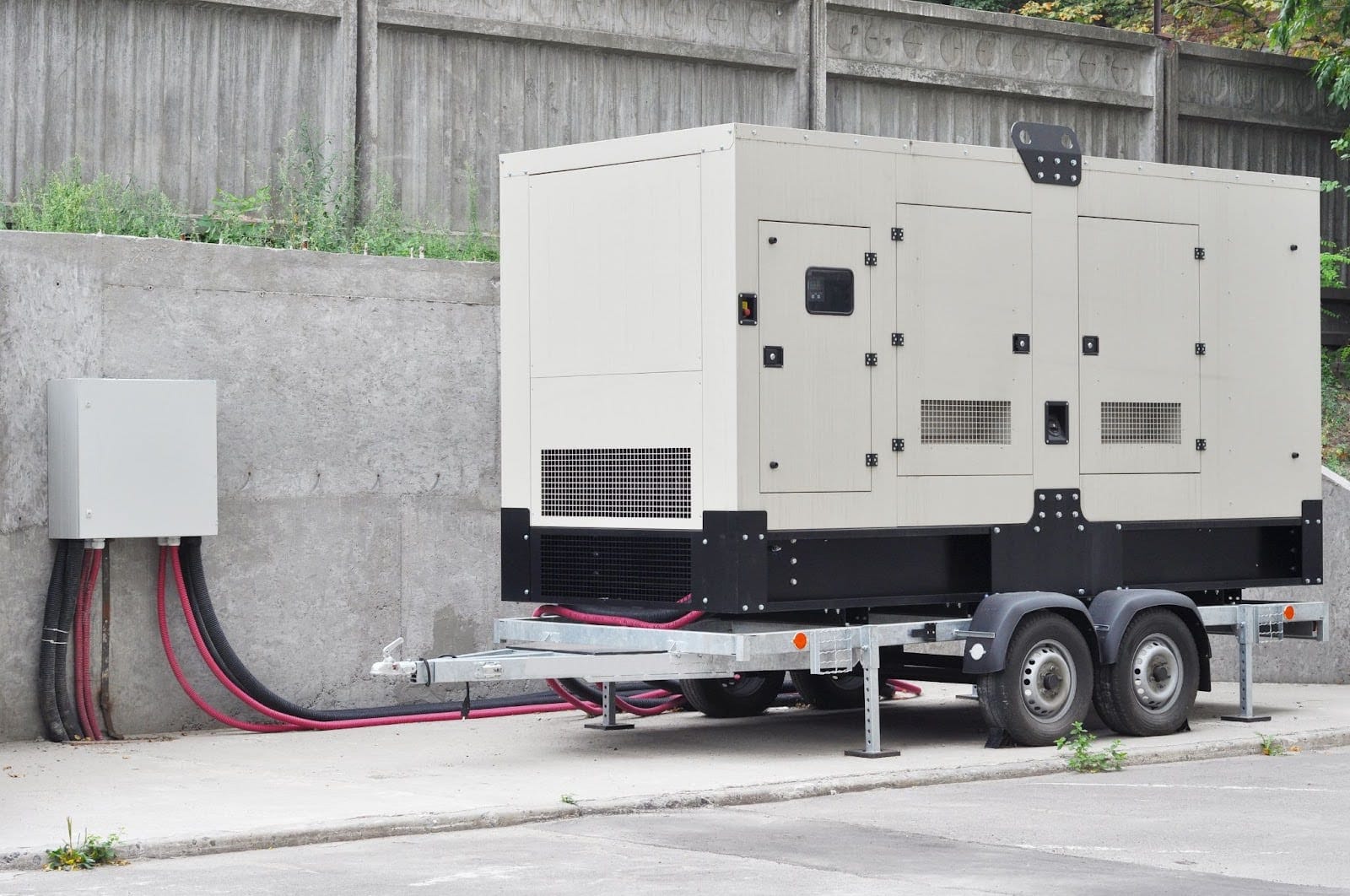
Trailer-mounted units handle temporary installations requiring substantial power output. These industrial-grade generators arrive on road-ready trailers, connection-ready for your site. Capacities range from 20 kW for modest facilities to 2,000 kW for large industrial operations or major events. Rental options include various mounting configurations based on duration and application needs.
Sizing Tips for Facilities vs. Events
Facility power requirements tend to be consistent. Calculate the maximum simultaneous load at peak output, add a 20% safety buffer, and you’ll know the generator size. Consider whether the industrial generator rental is required to power the entire facility or only crucial systems.
Events provide various obstacles. Power demand varies throughout the day. Size your event generator for peak load periods when food service, full lighting, and all presentation systems are operational at the same time, rather than for typical usage.
Weather influences outdoor event planning. Temperatures exceeding 90°F limit generator output capacity. Plan for reduced performance in hot conditions by selecting units with more capacity. Power distribution equipment that is appropriately sized for your generator eliminates voltage drops and circuit overloads.
Common Mistakes When Renting Generators
The most common mistake is waiting until the last minute to rent. Popular sizes and fuel kinds fill up quickly during high seasons or following widespread outages. Make sure to reserve equipment at least two weeks in advance for activities.
Complications also arise in multi-day operations when fuel consumption gets overlooked. Check fuel tank capacity and schedule refueling if the runtime will exceed that amount. For example, a generator that consumes 10 gallons every hour requires 240 gallons for a 24-hour operation.
Overlooking noise levels poses problems during gatherings and in residential neighborhoods. Industrial generators generate 70-90 dB at ordinary distances. Sound-attenuated models or a suitable location reduce complaints and possibly shutdowns from local authorities.
Even suitably sized generators are limited by inadequate cabling. Work with vendors who provide comprehensive solutions, including distribution equipment tailored to your generating capacity.
Finally, don’t skip professional load estimates as it results in either weak or oversized equipment. Professional sizing finds the balance between necessary power and cost efficiency.
Connect With Mobile Air’s Power Specialists
When choosing the correct generator, you must consider load requirements, fuel availability, runtime expectations, and budget limits. Mobile Air & Power Rentals has decades of experience combining generators with real-world applications in a wide range of industries.
Safety is as important as performance. Following instructions from resources such as Energy.gov’s generator safety recommendations reduces the chance of carbon monoxide, electrical hazards, and fires.
Get a custom generator recommendation from Mobile Air & Power Rentals today. Request a quote and speak with power specialists who will match the right equipment to your specific needs.