Fall Facility Maintenance Checklist: How Temporary HVAC & Power Rentals Keep Projects on Schedule
Cooler weather brings a rush of activity for facility teams. Once summer heat fades, many buildings finally get the green light for HVAC replacements, boiler inspections, and electrical upgrades that were pushed off for months. Getting this work done before winter arrives isn’t just tradition. It’s about avoiding equipment failures when temperatures drop and demand on heating systems spikes.
This is also why planned facility maintenance tends to cluster so heavily in September and October. Teams want systems tested and ready before the cold sets in, and contractors book up fast once the season starts. A temporary HVAC rental often becomes part of that timeline, giving crews room to work without leaving occupants sweating or shivering in the meantime.
The Projects Keeping Facility Teams Busy Right Now
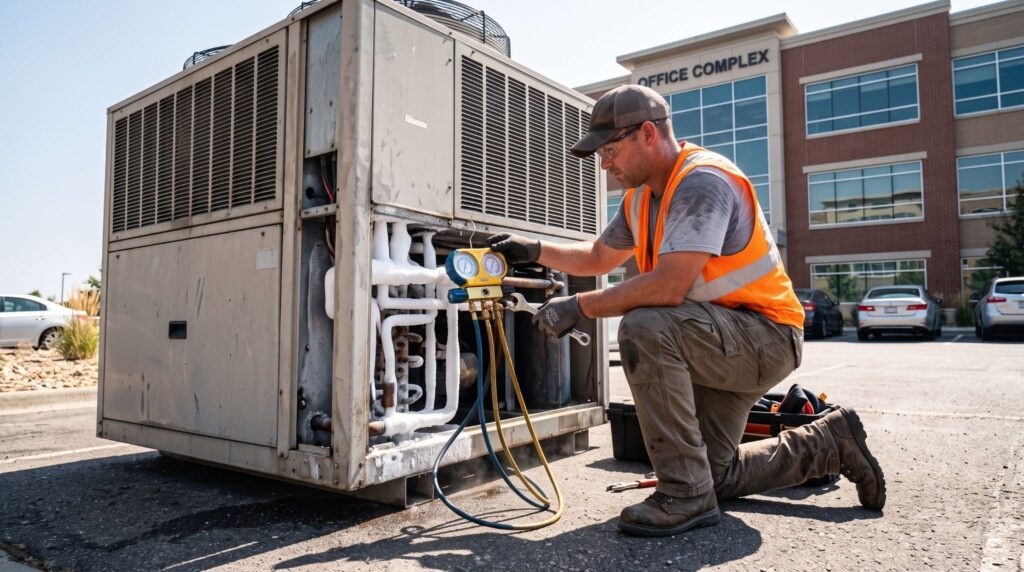
Chiller swaps, rooftop unit replacements, and boiler tune-ups top the list. Hospitals schedule air handler work around patient care windows. Manufacturing plants shut down production lines for electrical panel upgrades. Universities tackle dorm and classroom HVAC before students return for the spring term. Commercial property managers handle roof repairs that require shutting off cooling or heating for days at a time.
Each of these falls under commercial HVAC maintenance, and each one leaves a gap that needs to be filled somehow. A planned facility shutdown, even a short one, can stall production lines, disrupt patient rooms, or leave office tenants without air. That’s where a backup plan pays for itself.
Staying Operational While the Work Gets Done
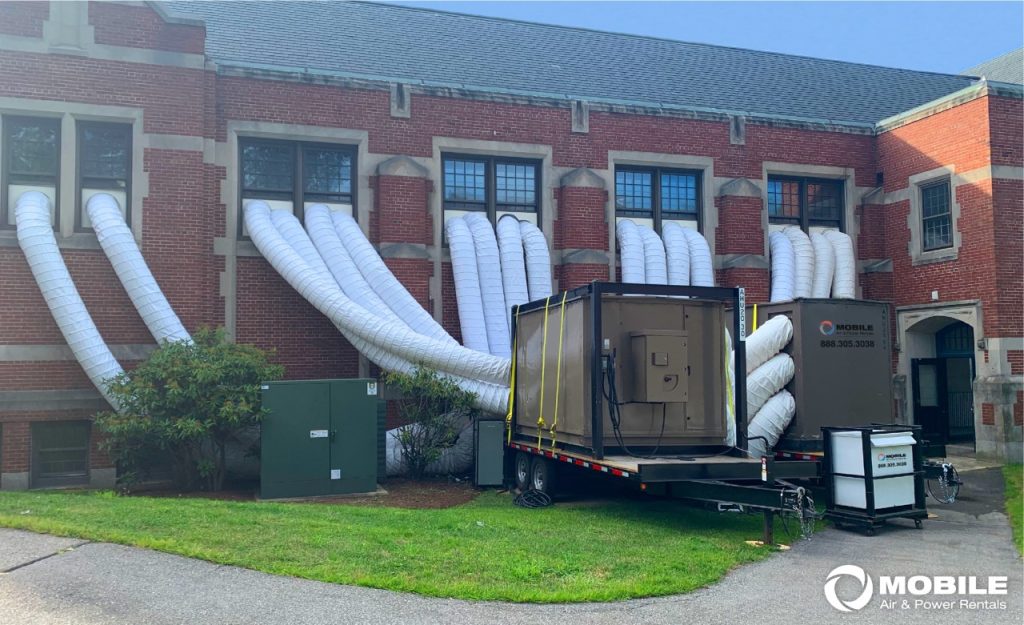
Swapping a chiller doesn’t have to mean shutting down operations for a manufacturing floor or an office building. Portable units step in, keeping air moving and temperatures steady while the permanent system sits offline. The same logic applies to temporary heating rental needs during boiler replacements and to temporary cooling rental setups during rooftop unit swaps.
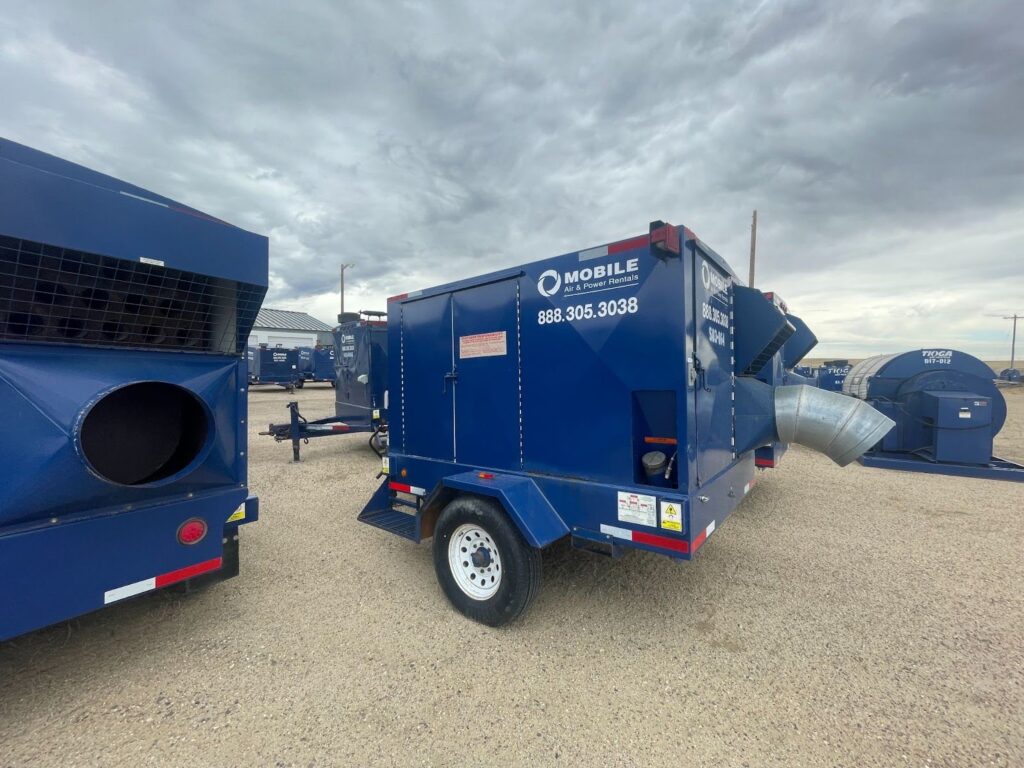
Power is often the piece people forget. Electrical panel work, transformer swaps, and generator maintenance all call for temporary power solutions that keep the rest of the building running normally. Pair that with a generator rental for backup during the switchover and dehumidifiers to control moisture wherever ductwork sits open to outside air. None of this needs to feel improvised. With the right pieces lined up ahead of time, a temporary HVAC rental becomes just another step in the project plan, not a last-minute scramble.
Why Planning Beats Reacting
Facilities that call for equipment the week before a shutdown often pay more and get less choice. Booking early gives your team room to match equipment size to the actual job, not just whatever happens to be available. We covered this trade-off in more detail in our post on renting versus buying temporary HVAC and power equipment, but the short version is this: preventative maintenance planning saves money and headaches compared to scrambling after something breaks.
Equipment Sized for Your Facility
No two shutdowns look the same. A hospital wing needs quieter, hospital-grade units. A warehouse might need raw cooling capacity and nothing else. That’s the idea behind engineered solutions: equipment, ductwork, and power distribution mapped out for your building’s layout before the trucks even arrive. A chiller rental sized wrong wastes energy and money, so getting the specs right matters more than people expect.
Mistakes That Slow Things Down
The most common misstep is waiting too long to call. Others include underestimating power needs, forgetting permits for generators, or skipping a walkthrough of the site before delivery. Small oversights like these turn a two-day project into a two-week one.
Your Fall Facility Maintenance Checklist
Before your next shutdown or fall maintenance project, run through a few basics:
- Confirm the full scope of work and the actual shutdown window. Know which areas will be affected, how long equipment will be offline, and whether work will happen in phases. A project that runs two days instead of one can quickly create HVAC and power problems if temporary equipment was only planned for the original schedule.
- Calculate the square footage and load that needs temporary support. For HVAC, consider the size and layout of the affected space, heat generated by workers and equipment, and outside temperatures. For power, identify every piece of equipment that will need electricity and its total load.
- Plan temporary HVAC before the shutdown begins. Temporary air conditioning, heating, or ventilation can help maintain safe working conditions and protect temperature-sensitive equipment while permanent systems are offline.
- Line up backup power requirements well ahead of time. Determine whether you need generators, distribution equipment, or additional electrical capacity. Waiting until the week of the project can limit equipment availability and leave little time to address electrical requirements or site logistics.
- Build buffer time into the project schedule. Equipment repairs, inspections, material delays, and unexpected site conditions can all extend a shutdown. Having temporary HVAC and power available for an extra day or two can help prevent a small delay from turning into a larger scheduling problem.
- Plan for moisture and humidity. If the project involves exposed ductwork, water intrusion, wet materials, or standing water, add a dehumidifier rental to the plan. Controlling moisture can help protect materials and equipment while the facility is being repaired or renovated.
- Plan equipment placement and connections in advance. Identify where temporary units, generators, ducting, power cables, and exhaust will go. This helps crews get equipment running faster and reduces interference with workers, entrances, and other facility operations.
- Assign someone to monitor conditions during the project. Temperature, humidity, and power needs can change as work progresses. Having someone check conditions regularly makes it easier to adjust temporary equipment before a problem affects the schedule.
Working through this list early saves a lot of back-and-forth once the project is underway.
Support Wherever Your Facility Is
Mobile Air works with facility teams across the country, from single-building shutdowns to multi-site rollouts. Whether it’s one portable unit or a full temporary power setup, the goal stays the same: your operation keeps running while the real work happens behind the scenes.
Ready to build a maintenance plan? Contact a specialist to map out a temporary HVAC and power plan before the project starts.