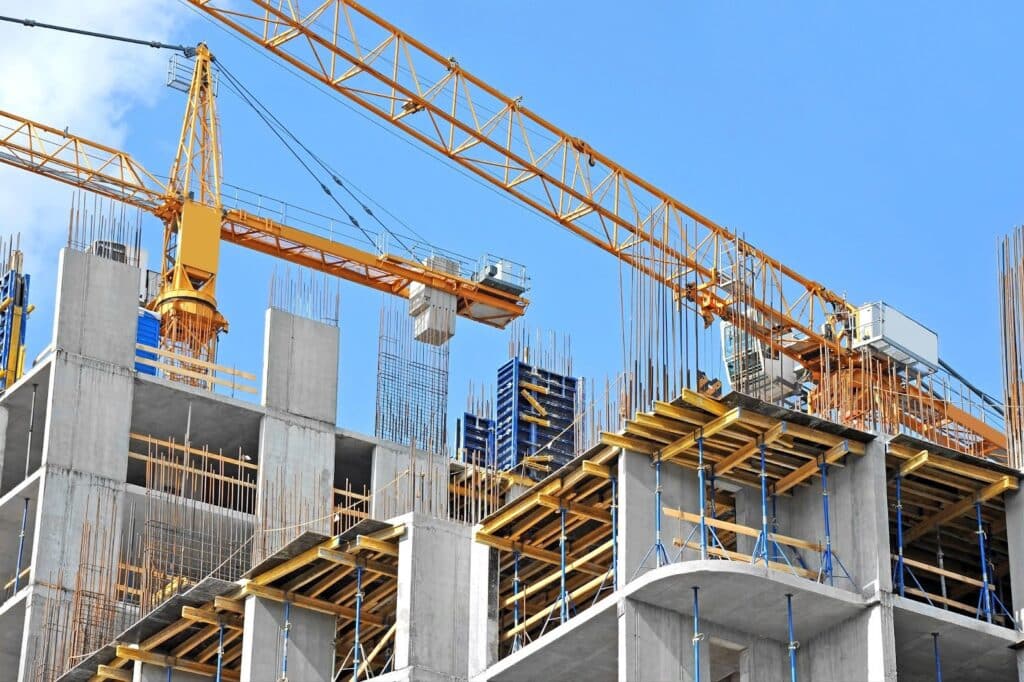
The mildness of springtime brings comfortable temperatures across the country. During these months, cooling feels like a summertime issue. However, things are different on building sites that are currently under construction. Hours before the weather outside feels warm, buildings retain heat from people, machinery, and direct sunlight, and humidity quickly increases.
This gap between perception and reality leads to planning blind spots. It is not labor or supply chain challenges that lead projects to fall behind schedule, but rather the failure to plan for climate control during the final stages. A temporary chiller rental turns into an afterthought rather than a calculated choice, and the delay costs money.
Why Permanent HVAC Systems Aren’t Ready When You Need Them
Construction sequencing creates an unavoidable timing problem. HVAC systems get installed late in the build cycle, and power infrastructure might not be ready. Before mechanical systems can function correctly, they must be commissioned, and inspections take weeks to complete.
Interior finishing work begins on time in the meantime. Paint workers mobilize, flooring is placed, and drywall is installed. The building’s permanent cooling system isn’t working yet, and these trades require steady environmental conditions to perform their jobs well. This is where climate control for construction sites becomes necessary, not optional.
Hidden Delay Factors: Humidity and Early Heat
Temperature and humidity problems show up in ways that directly impact your schedule. Drywall joint compound won’t cure properly when humidity levels run too high. What should take three days stretches to five or six. Surface defects appear, requiring fixes before paint crews can start.
Moisture has a negative effect on flooring materials. Adhesives don’t work, wood distorts, and the edges of vinyl tiles lift. These are inspection errors that impede development and necessitate costly rework, not small aesthetic problems.
Variations in temperature throughout the day cause paint and finish coats to cure unevenly. As inspectors take note, your schedule is delayed by an additional week if they reject the work.
Installations of sensitive equipment must adhere to much more stringent regulations. Stable surroundings are necessary for the setup of data rooms, medical facilities, and electrical panels. The regulated conditions required for these installations are provided by portable chiller units.
Cooling Requirements for Equipment Commissioning
The proper environmental conditions are necessary for commissioning agents and MEP teams to test permanent systems. Stable temperature ranges are necessary for building automation systems to calibrate correctly. Operational cooling is necessary during load testing to avoid equipment damage.
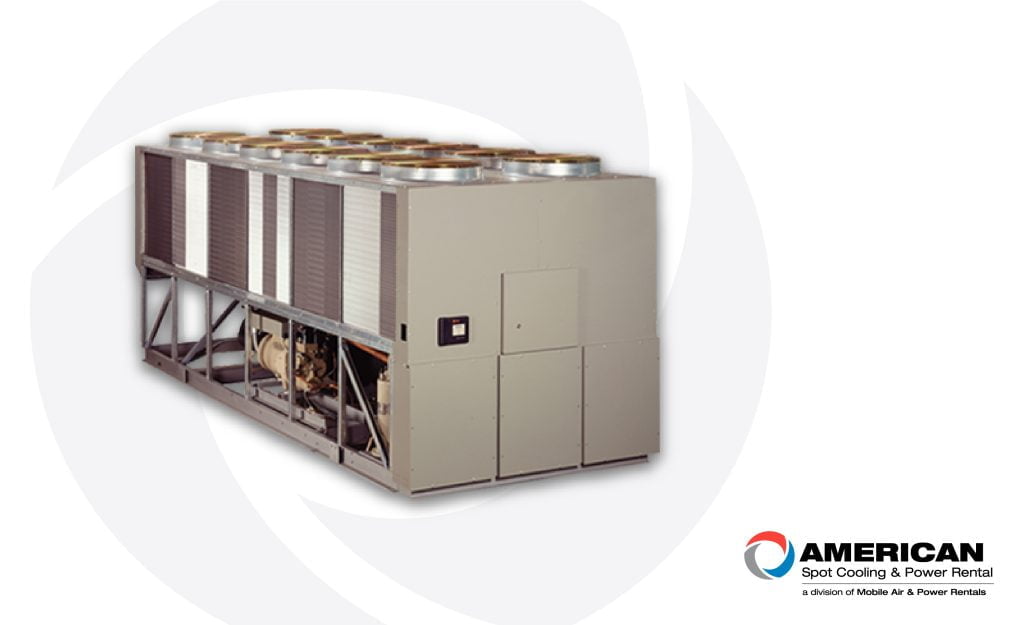
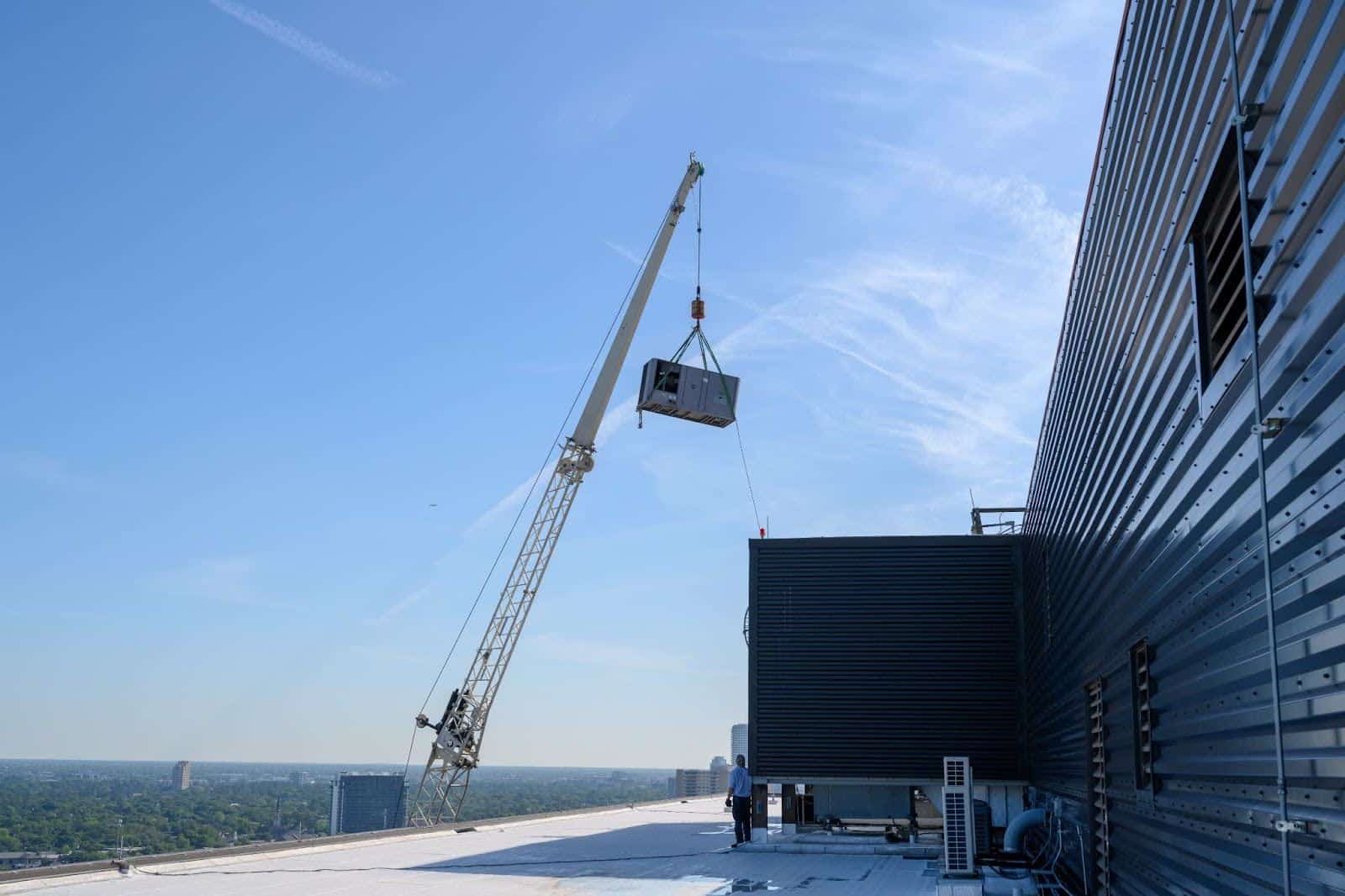
Construction cooling solutions during commissioning aren’t supplemental; they are required. Air-cooled or water-cooled chiller rental options provide the capacity needed to support phased system startups and full operational testing.
How Inspection Failures Cost More Than Equipment Rental
Building inspectors evaluate moisture levels, proper material curing, and environmental compliance. High humidity readings fail the inspection. Temperature variance during curing phases fails the inspection. Material instability from poor environmental control fails the inspection.
Each failed inspection adds delay as re-inspections take time to schedule. Contractors sit idle while waiting for approval to proceed. The true cost of schedule delays and inspection failures is much more than the rental fees for temporary cooling equipment.
A Realistic Spring Construction Scenario
Consider a 75,000 square foot commercial build scheduled for April completion. The permanent HVAC installation falls three weeks behind schedule. Flooring installation can’t wait, and humidity levels inside the building are climbing as spring weather warms up.
Without intervention, flooring gets delayed, commissioning gets pushed back, and the project falls further behind schedule.
With a temporary chiller rental deployed proactively, the building maintains a controlled 68-72°F environment with stable humidity. The installation of the flooring goes according to plan, and the materials are properly cured. Commissioning proceeds according to schedule. Rather than becoming a project-stopping crisis, the persistent HVAC delay becomes a background problem.
When Portable Chillers Make Sense for Construction Projects
The most dangerous parts of multi-story commercial buildings are the interior finishing stages. Throughout the development process, healthcare projects must adhere to strict environmental regulations. When installing equipment, data centers and manufacturing facilities require precise climate control.
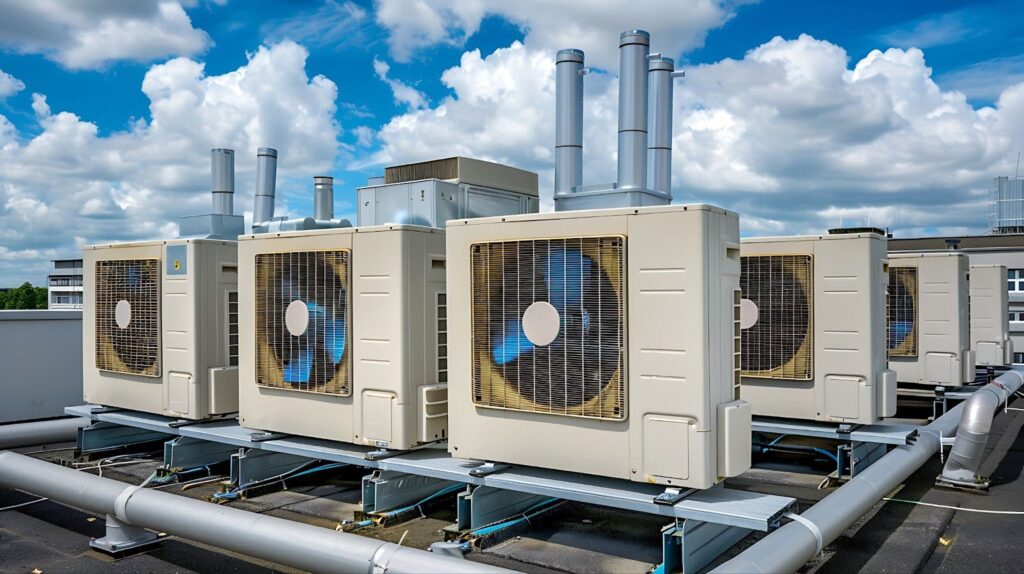
An air-cooled chiller rental is a good option for locations with short setup times or restricted water access. For bigger projects with longer schedules, water-cooled systems provide more efficiency.
Why Planning in Spring Beats Emergency Response
The best months to rent chiller equipment are March and April. It is more readily available, and prices remain competitive. Instead of taking whatever capacity is offered during a hasty deployment, you have time for accurate load assessments.
Rentals for emergencies are more expensive and offer less flexibility. Instead of settling for adequate, planning ahead entails developing the ideal solution for your particular project requirements.
Control the Environment, Control the Schedule
Construction timelines don’t slip because of temperature alone. They slip because climate control wasn’t part of the plan from the start. When environmental conditions are not adequately controlled, materials fail, inspections are denied, and commissioning stalls.
Temporary cooling solutions for construction safeguard your turnover date, inspection schedule, and materials. Before heat and humidity convert a planning gap into a budgetary issue, astute teams make that investment in the spring.
Ready to get started? Contact Mobile Air today.