In March, summer seems far away. Winter maintenance is finished, your building is operating smoothly, and air conditioning issues appear to be months away. However, cooling problems don’t wait for June. When May rolls around and the temperature rises, hundreds of other facilities will be vying for the same equipment.
Proactive facilities managers are more knowledgeable. They prevent the turmoil that arises when everyone needs assistance by securing temporary cooling leasing agreements prior to demand spikes.
What Happens When You Wait Until May
There are three ways that reactive planning costs you. As specialized units and high-tonnage chillers are reserved in advance, equipment availability decreases, giving you fewer options and longer lead times. When you’re in a pinch, emergency pricing takes the place of regular rates, and faster logistics combined with extra labor drive up costs even further.
Operations are where the actual suffering occurs. Production lines are shut down. Healthcare establishments run the danger of breaking regulations, and uncomfortable circumstances are a source of complaints from tenants. Put simply, you pay higher prices for what’s left in stock when you urgently require emergency cooling solutions.
Why Cooling Issues Start in Spring
Most people assume July and August bring the highest failure rates, but they’re wrong. Spring maintenance uncovers failing compressors that won’t survive summer loads. Construction projects move indoors, requiring climate control for the first time. Data centers and manufacturing facilities see processing demands increase ahead of peak season.
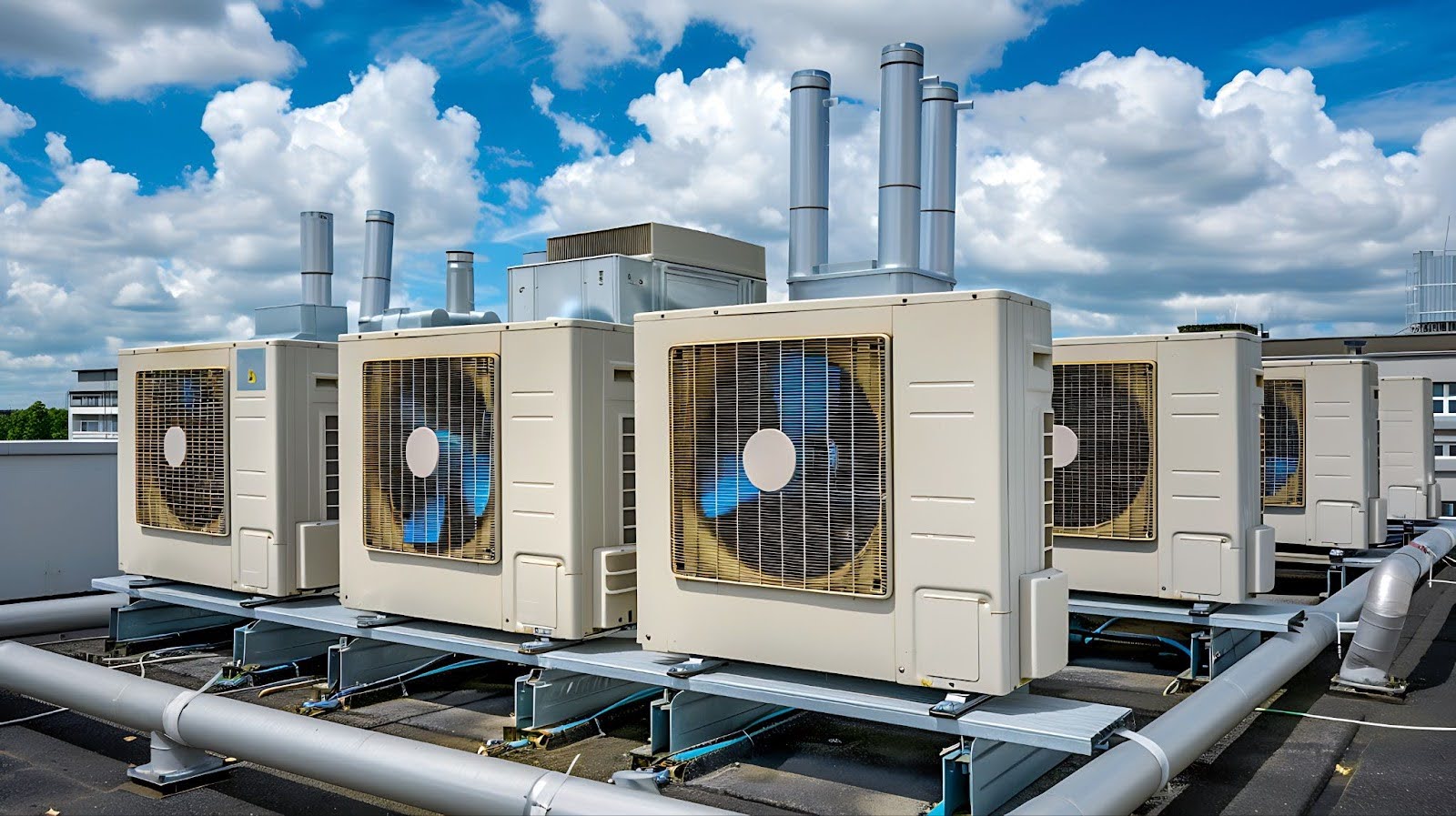
During the first prolonged heat wave in April or May, aging rooftop units that made it through the winter frequently fail. Before the actual summer arrives, these weaknesses become apparent, taking unprepared teams by surprise.
Construction Timelines & Temporary Cooling Gaps
When it comes to general contractors, they face a predictable pattern. Permanent HVAC installation gets delayed by inspections, supply chain issues, or coordination problems. Interior work cannot wait in the meantime. For instance, certain temperature and humidity ranges are necessary for drywall, flooring, adhesives, and finishes.
If you are able to rent a construction chiller or portable air conditioner in March, it indicates that you have already planned phased deployments, reserved appropriately sized equipment, and performed load estimates before your timeline depends on it. Additionally, anxious phone calls are prevented when the permanent system’s installation date is missed.
Engineered Load Calculations: The Cost-Control Advantage
This is the point at which planning distinguishes expert facility management from speculation. Budgets are often wasted on unnecessary tonnage when you use oversized equipment. Undersized units are unable to sustain setpoints, resulting in emergency equipment swaps and doubled delivery costs.
Mobile Air starts each chiller rental process with a site assessment and accurate load estimations. We evaluate power distribution needs, choose the appropriate tonnage for your area, and match equipment to your unique circumstances. The costly errors caused by reactive rental are avoided by this technical approach.
When to Reserve a Chiller vs. a Spot Cooler
Different solutions are required for different scenarios. Spot coolers are ideal for small office spaces, server rooms, and specific hot locations that require focused relief. They don’t need a lot of setup, are portable, and can be quickly deployed.
Situations with greater demands are handled by chillers. Chiller capacity is usually required for complete building outages, manufacturing process cooling, climate control on construction sites, and facilities larger than 10,000 square feet. The infrastructure and heat rejection capabilities of your location will determine whether you rent an air-cooled or water-cooled chiller.
Cooling Contingency Planning: A March Checklist
Start by analyzing your last year’s maintenance reports. Determine which units exhibited issues during their most recent service or are aging. Determine whether your cooling load will be higher than it was the previous year due to summer manufacturing schedules.
For areas that may require backup cooling, schedule load calculations. While there is a large selection, reserve high-tonnage equipment today. Verify that temporary units can be supported by your electrical infrastructure. To ensure that your staff is aware of who to contact in the event that primary systems fail, document your emergency response plan.
Why March Is the Smartest Month
Better pricing, greater equipment selection, flexible engineering support, and reduced risk all favor early planning. March gives you leverage. On the contrary, July leaves you with whatever’s available at whatever price the market will bear.
Overall, strategic temporary HVAC rental planning in March means smooth operations in August.
Be Strategic, Not Reactive
The difference between emergency response and engineered cooling comes down to timing. March is when prepared teams lock in their backup plans. As a result, summer runs smoothly while competitors scramble.
Mobile Air engineers solutions in advance. Contact us for load calculations and equipment planning, or explore our chiller rental and portable air conditioner rental options.