
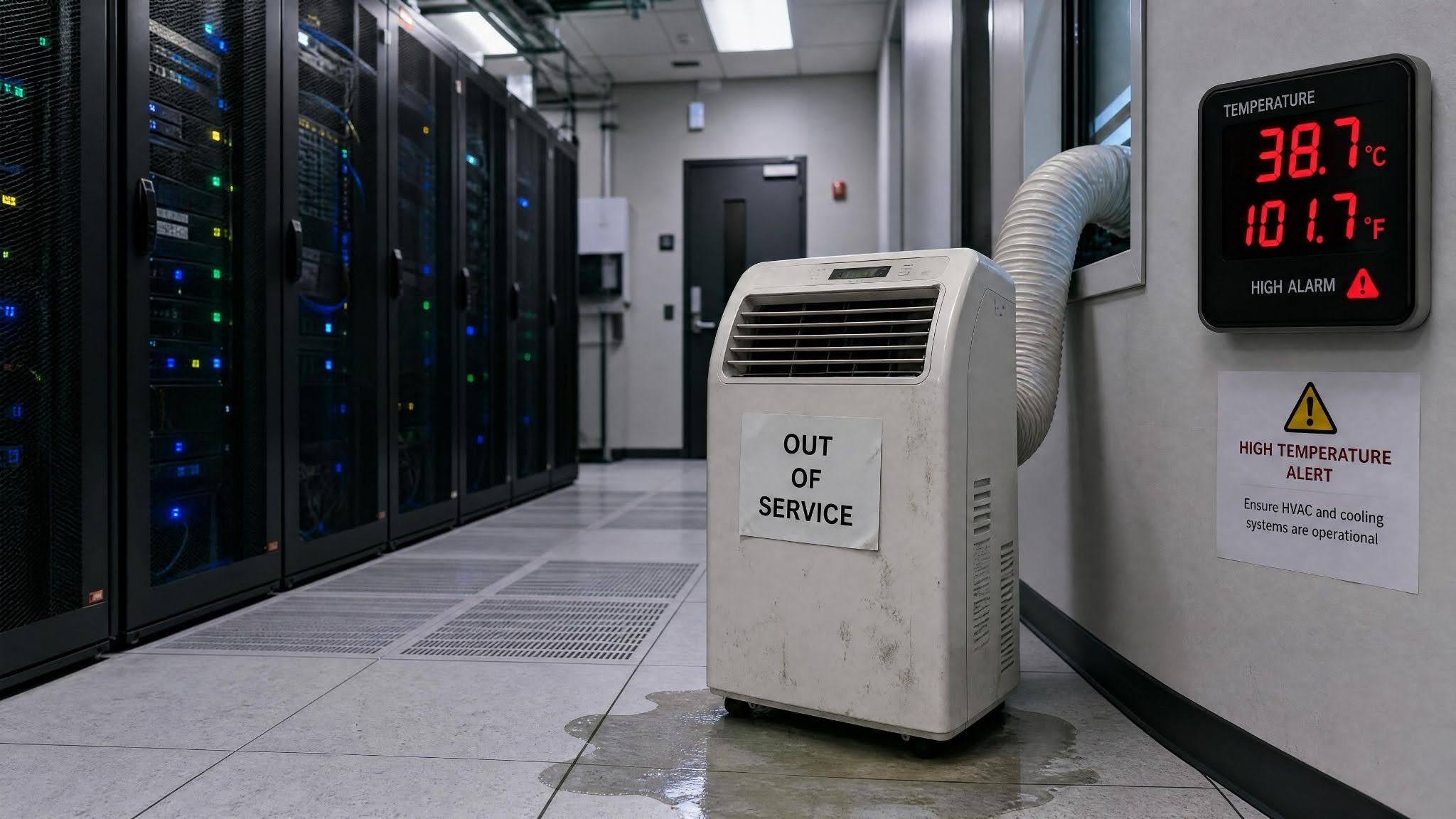
Commercial buildings need steady temperatures to protect equipment, maintain productivity, and keep employees safe. Building managers face urgent pressure when cooling systems start to fail, and temperatures climb. Understanding what triggers these sudden cooling problems—and knowing how to fix them fast—can stop small issues from becoming expensive emergencies.
When the HVAC system in your building fails to maintain the proper temperature, a cooling crisis occurs. These are urgent malfunctions that must be fixed right away, not the slowdowns that give you weeks to plan a repair call. The good news is that while your regular system is being fixed or replaced, emergency cooling equipment may return your area to normal temperatures in a matter of hours.
5 Common Causes of Cooling Emergencies
Although there are numerous factors, many emergencies are caused by the following:
- HVAC Equipment Breakdowns
The most common reason for commercial HVAC failure is mechanical issues. After operating continuously for years, compressors eventually burn out. Aging coils might cause refrigerant leaks. Lack of maintenance causes motors to seize. During times of high demand, belts break. During the hottest months of the year, when HVAC systems are operating at their peak efficiency, these component breakdowns frequently occur without warning, leaving facilities frantically searching for alternatives.
- Power Outages or Electrical Failures
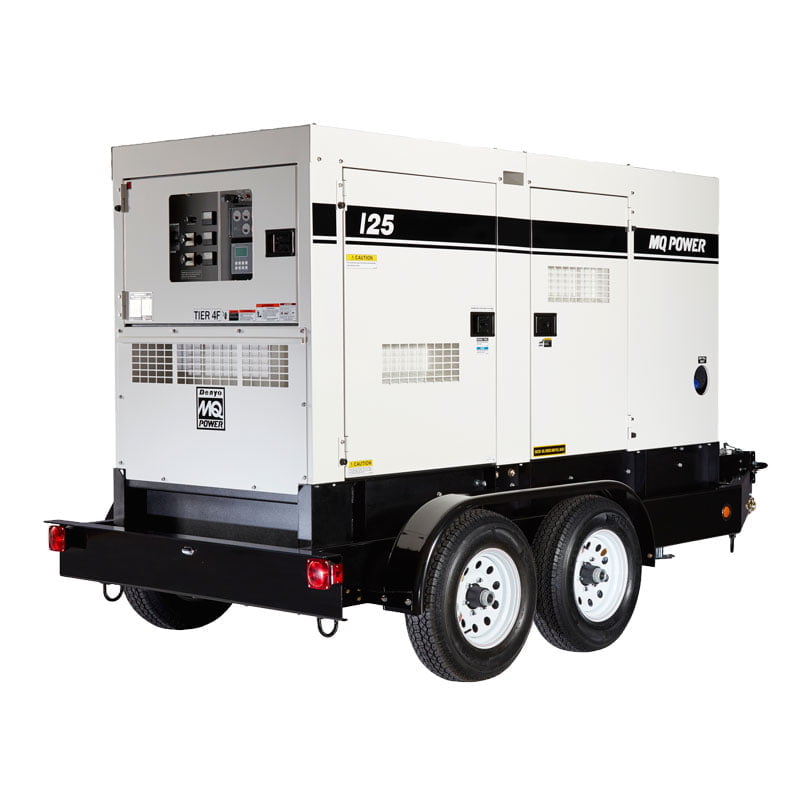
Even well-maintained cooling systems may become unusable as a result of electrical problems. Severe weather causes a loss of grid electricity. Heavy loads cause circuit breakers to trip. Transformers fail when demand peaks during heat waves. Lightning struck the damage control boards. Backup generators may be able to restart some building services, but they may not be capable of handling full HVAC loads, necessitating targeted cooling in critical areas.
- Extreme Heat Overwhelming Systems
HVAC systems are increasingly being forced to operate outside the parameters of their design due to climate trends. When temperatures rise 10 to 15 degrees over historical averages, equipment designed for normal summer circumstances struggles. As the outside temperature rises, air-cooled chillers become less effective. Rooftop units never reach setpoints and cycle constantly. Technically speaking, the system is still operational, but it is unable to sustain comfortable conditions, resulting in a commercial cooling failure that impacts entire facilities.
- Planned Maintenance or System Replacements
Not all cooling emergencies are caused by unforeseen malfunctions. Planned outages resulting from major maintenance projects and equipment upgrades still call for interim fixes. It takes weeks to replace old chillers. Air distribution is disrupted when ductwork is upgraded. Equipment must be taken offline for testing in order to install new control systems. During these projects, buildings cannot just close, thus temporary air conditioning rental is necessary to keep things running.
- Construction or Facility Upgrades
Renovation activity frequently puts existing HVAC capability at risk. The heat generated by new server installations exceeds the capacity of cooling systems. Warehouse extensions exceed the capability of the current gear. Coils and filters are clogged with building dust. Temporary walls restrict airflow. Even when the main system is operational in other areas of the building, these conditions create localized hot zones.
Risks of Cooling Failure
Many perils are faced in an emergency, depending on the facility and operations. Common risks include:
Operational Downtime
Elevated temperatures make it impossible for many commercial businesses to operate. Certain environmental conditions are necessary for manufacturing processes. Strict temperature ranges must be maintained in data centers to avoid server damage. Climate control is essential to accurate testing in laboratories. Food service establishments run the danger of breaking the health code. Lack of proper cooling results in lost income and productivity every hour.
Equipment Overheating
When sensitive machinery is operating, it produces its own heat. In equipment rooms, temperatures rise quickly in the absence of adequate cooling. Overheating causes motors to malfunction. Electronics break down. Batteries deteriorate. Computers either completely shut down or reduce their performance. The cost of replacing damaged equipment is frequently far more than the cost of using emergency cooling methods right away.
Employee Safety Concerns
To protect worker health, OSHA regulations specify the maximum workplace temperatures. When air conditioning fails during the summer, indoor conditions can quickly become perilous. Workers are at risk of developing heat exhaustion. When people are uncomfortable, they become less productive. Some facilities are obliged to abbreviate shifts or send employees home, exacerbating labor inefficiencies and operating costs.
Product or Inventory Damage
When cooling fails, inventory that is sensitive to temperature suffers. Outside of storage guidelines, pharmaceuticals lose their potency. The lifespan of electronics is reduced. Food items become bad. Perishable items need to be thrown out. A single day without cooling can ruin thousands of dollars’ worth of merchandise for distribution centers and retail enterprises.
How Temporary Cooling Solves the Problem
There are several configurations of emergency cooling equipment that are appropriate for various building types and cooling requirements.
To start, portable air conditioner rentals work well in offices, retail shops, and mid-sized commercial spaces. You can roll these units wherever you need them most without cutting into walls or running new ductwork. Smaller models handle individual rooms while larger systems can cool whole sections of a building. Setup takes hours instead of days, which makes portable AC the go-to option when you’re racing the clock.
Server rooms, electrical panels, and manufacturing equipment all benefit from spot cooler rentals because they provide concentrated cooling directly to overheated equipment. Instead of cooling entire areas, units send cold air to specific areas, and because of their compact size, they can be installed in confined spaces where larger systems would not fit.
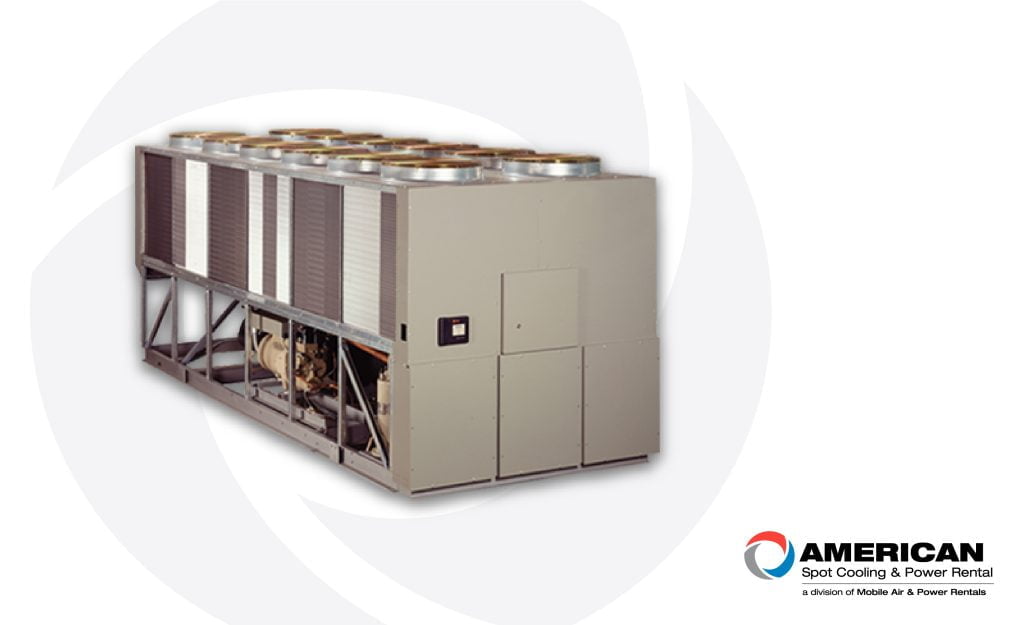
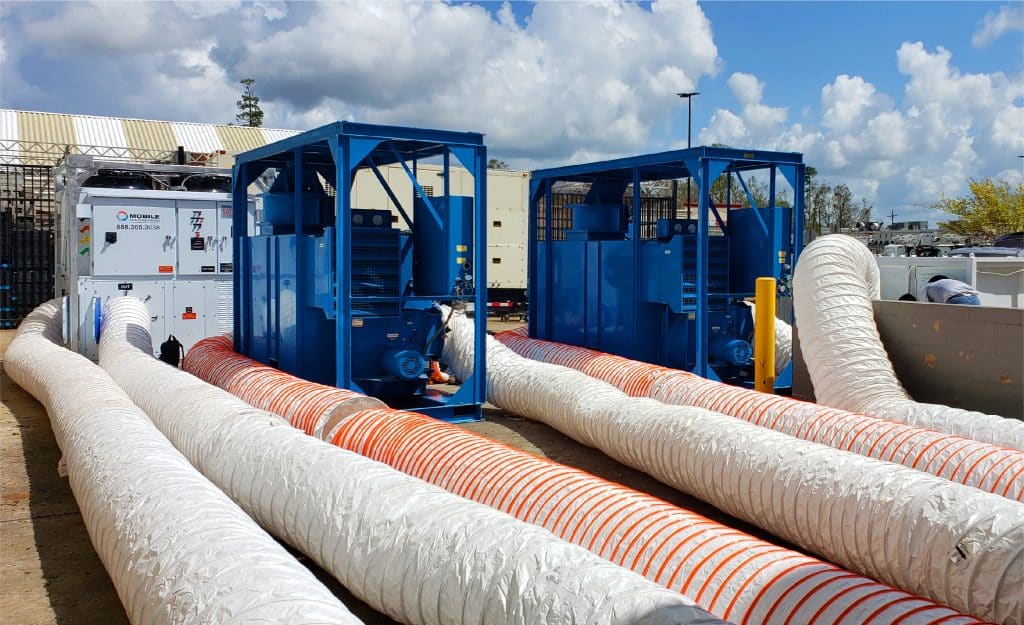
When you’re dealing with a bigger operation, temporary chiller rentals handle the heavy lifting for hospitals, manufacturing plants, and large office towers. These systems plug into your existing infrastructure to provide backup capacity while your permanent equipment gets fixed. Trailer-mounted units can pump out hundreds of tons of cooling, keeping major facilities operational through extended outages or equipment overhauls.
Quick Response Guide: What to Do If Your Building Loses Cooling
When cooling goes out, start by investigating common causes. For example, look at the power supply, thermostat settings, and system components to see if you can fix it in-house or need to call for help. Basic fixes like resetting circuit breakers or swapping out controllers sometimes get things running again without renting emergency equipment.
When temperatures shoot up fast, focus on your critical spaces first: server rooms, production floors, medical facilities, or areas where people work. You can buy time by moving temperature-sensitive inventory to cooler spots or powering down equipment you don’t absolutely need while you work out a longer-term fix.
Temporary cooling equipment can be used to restore safe temperatures if repairs cannot be finished right away. Reputable rental companies like Mobile Air keep stock on hand, especially for emergency response; they are available around the clock and can quickly send equipment to the site in a matter of hours.
Until permanent HVAC systems are repaired or replaced, rental equipment can be swiftly provided and used to maintain indoor temperatures. During the rental duration, competent installation ensures ideal dimensions and positioning, which improves cooling efficiency and lowers energy costs.
As discussed, temporary HVAC solutions protect operations during crucial times by bridging the gap between system failure and complete restoration. When cooling emergencies arise, facility managers who are aware of typical failure reasons and keep in touch with emergency equipment suppliers can act quickly to minimize downtime and stop the cascade of issues that follow uncontrolled temperature increases.
Contact Mobile Air today for your temporary cooling needs.



)
&description=&image=https://mobileair.com/wp-content/uploads/2026/05/what-causes-temporary-cooling-emergencies-in-commercial-buildings-1024x576.jpg)