When your facility needs a temporary chiller rental, the first decision you’ll face isn’t which brand or how many tons. It’s a question of whether to go air-cooled or water-cooled. Both types get the job done, but they suit different situations, and picking the wrong one can create installation headaches or leave you short on capacity.
HVAC failures, planned shutdowns, and construction projects all create urgent cooling needs. Understanding how each chiller type works helps you move faster and spend smarter when the pressure is on.
What Are Air-Cooled Chillers?
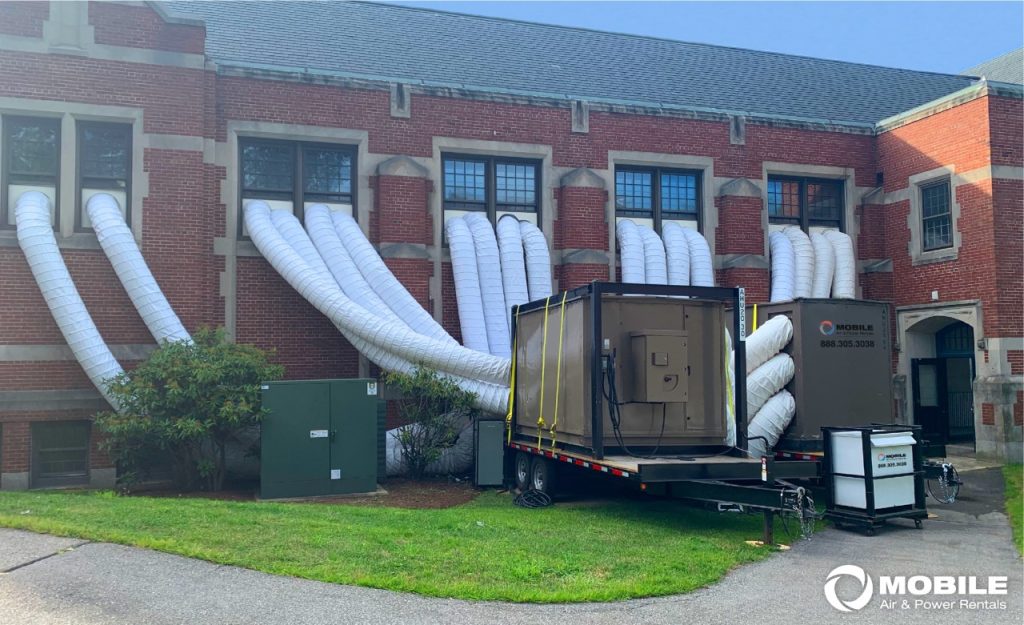
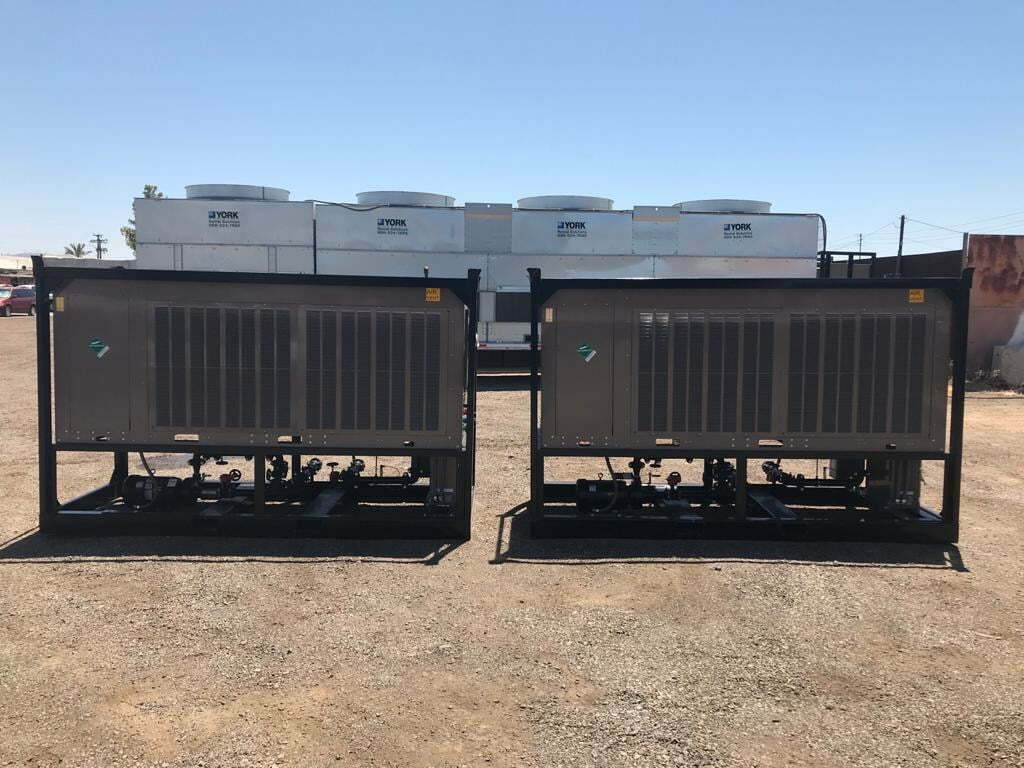
An air-cooled chiller rental uses fans to push ambient air across a condenser coil, releasing heat directly into the surrounding environment. There’s no water loop, no cooling tower, and no complex plumbing required.
That simplicity is the main draw. Air-cooled units can be positioned outdoors, connected to your existing piping, and run in a fraction of the time it would take a water-cooled setup. They’re a natural fit for temporary cooling projects where speed of deployment matters and the site lacks existing water infrastructure.
What Are Water-Cooled Chillers?
Water-cooled chiller rental units operate differently. Instead of rejecting heat into the air, they transfer it into a water loop, which then runs to a cooling tower where the heat dissipates. The result is a more thermally efficient process, particularly at high ambient temperatures.
Larger establishments that already have condenser water infrastructure and cooling towers frequently use water-cooled systems. This group frequently includes major commercial buildings, manufacturing facilities, and hospitals. Consistent performance under high, continuous load is the reward for the more extensive initial setup.
Key Differences Between Air-Cooled and Water-Cooled Chillers
A few key differences exist between the two; here’s a quick summary.
Air-cooled chillers:
- Use fans and ambient air
- Require less infrastructure
- Are easier to deploy
Water-cooled chillers:
- Use cooling towers and water systems
- Handle larger cooling loads
- Are often more efficient for large facilities
Water-cooled chillers typically use less energy per ton of cooling, especially in hotter climates where air-cooled units work harder against high ambient temperatures. Air-cooled systems are easier to install and can often be set up on a roof or parking lot with minimal site preparation, while water-cooled units require access to a condenser water system. Air-cooled equipment needs adequate airflow clearance around condenser fans, whereas water-cooled systems need space for the cooling tower and piping. In hot environments or confined mechanical spaces, water-cooled systems tend to operate more reliably.
Benefits of Air-Cooled Chillers
There is a speed advantage. Compared to a water-cooled option, an air-cooled chiller rental may be delivered, connected, and operating far more rapidly. It’s difficult to beat that turnaround time in an emergency.
There is very little infrastructure needed. Air-cooled devices completely avoid the issue.
Another component is flexibility. These systems are useful in a variety of settings, including retail establishments, office buildings, outdoor events, and construction sites. They are among the most often used temporary cooling solutions because of their adaptability.
Benefits of Water-Cooled Chillers
Water-cooled systems excel at large cooling loads. The efficiency benefit becomes significant when a facility requires long-term, high-capacity cooling.
Water-cooled equipment is ideally suited for continuous operation. Water-cooled chillers are designed to meet the demands of manufacturing environments, data centers, and healthcare institutions, which frequently operate around the clock. They maintain more stable performance when conditions don’t let up.
Because the loads involved are too big and too constant for air-cooled systems to manage effectively, industrial cooling solutions in process-heavy settings usually rely on water-cooled equipment. A water-cooled chiller rental is often the only practical option at that scale.
How to Choose the Right Temporary Chiller
The facility’s size is a good place to start. Air-cooled equipment is often effective in smaller and mid-sized structures with cooling loads under a few hundred tons. A water-cooled strategy is typically necessary for larger facilities with persistently high demand.
Existing infrastructure is a deciding factor. If your facility already has a condenser water system and cooling tower, a temporary chiller rental that’s water-cooled slots in more naturally. Without that infrastructure, air-cooled is almost always the simpler path.
Cooling demand is more important than overall tonnage. An air-cooled unit’s lower setup burden generally makes more sense if the load is fluctuating or the project is short-term. The effectiveness of a water-cooled system makes the additional complexity worthwhile for heavy, continuous loads. The equation is also shaped by the project’s length. A quick and simple solution is required for a one-week bridge rental during an equipment transfer.
For urgent situations, emergency cooling solutions are available with rapid deployment timelines for both chiller types. And if you’re still weighing options, browsing air-cooled chiller options alongside water-cooled alternatives can help clarify the right fit for your specific setup.
What’s the Difference Between Air-Cooled and Water-Cooled Chillers?
The core difference lies in how each system removes heat. An air-cooled vs. water-cooled chiller comparison really starts there.
Air-cooled chillers use fans and ambient air to directly reject heat. They require less infrastructure, connect more quickly, and work well for a wide range of temporary applications. If your facility doesn’t have a condenser water loop or you need equipment to run quickly, air cooling is usually the right call.
Water-cooled chillers route heat through a water loop and a cooling tower. They handle larger cooling loads more efficiently and perform better in environments with high ambient temperatures. The tradeoff is a more involved installation that depends on existing site infrastructure.
For most emergency rentals and short-term projects, air-cooled chiller rental wins on simplicity. For large-scale, long-duration, or process-intensive needs, water-cooled chiller rental delivers the capacity and efficiency those environments require.
Get Help With Temporary Cooling Today
The air-cooled vs. water-cooled chiller decision isn’t about which type is universally better. It comes down to your facility, your load, and your timeline. Air-cooled equipment moves fast and asks little of your site. Water-cooled equipment handles more demanding applications with greater efficiency.
Ready to get started? Contact Mobile Air today; our specialists will help guide you to the best solution for your particular conditions.